


Root Canal Treatment
Root canal treatment, or endodontic treatment, is the treatment of the interior of a tooth. To understand what root canal treatment is, one needs to know the structure of a tooth: inside the tooth, beneath the enamel and dentine, lies soft tissue — the dental pulp. The pulp consists of blood vessels, nerve fibres and connective tissue, extends from the upper part of the tooth crown to the root tips, and is connected to the tissues surrounding the root.
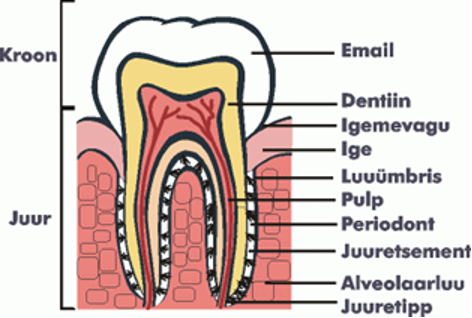 Root canal treatment is generally required when inflammation occurs in the dental pulp. The causes of inflammation may include deep caries, repeated dental treatment, a tooth fracture or even cracks. The dental nerve is very sensitive, and even if the fracture or crack is not visible, the nerve can be damaged and begin to hurt. If the tooth is left untreated for a long time, it causes severe pain and the inflammation spreads over time. When the inflammation has already reached the root tip, swelling occurs and there is a risk of abscess formation, which is already visible on the gum around the tooth and, in the worst case, on the face.
Symptoms Indicating Root Canal Treatment
A tooth may need root canal treatment if it has been hurting for an extended period and the pain is stronger compared to previous episodes. In addition, the tooth becomes more sensitive to both cold and hot. When touching the tooth or chewing during eating, the tooth is tender. If the gum or cheek is already swollen, this is a sign of inflammation and that the tooth requires root canal treatment. There are also cases where symptoms for root canal treatment are absent, but during a check-up it turns out that the tooth is diseased. We recommend visiting the dentist for a check-up at least once a year.
Root Canal Treatment Procedure
Once it has been determined that a tooth needs root canal treatment, the dentist removes the inflamed dental nerve, cleans the root canals of the tooth and, as a final step, fills and seals the canal space. After root canal treatment is completed, the tooth needs to be restored with a filling or crown so that it can perform its functions again.
In some cases, root canal treatment is initiated to relieve toothache caused by nerve inflammation. In such cases, local anaesthesia is used during the treatment, and the patient does not feel pain throughout the entire procedure, although sometimes this is unavoidable. After the completion of root canal treatment, the tooth may be sensitive and sore during the first few days, but this pain subsides within a couple of days. If necessary, we recommend taking an over-the-counter painkiller to reduce discomfort. We emphasise that the toothache is temporary; if the tooth continues to hurt for an extended period, you should return to the doctor for re-examination.
Root Canal Treatment Prices
The price of root canal treatment depends primarily on which tooth is being treated and whether it is initial treatment or retreatment. Back teeth are anatomically more complex, so their root canal treatment is longer and more expensive. The number of dental visits also affects the service price. The more complex the treatment, the more visits are required. However, root canal treatment and subsequent tooth restoration is still more affordable than tooth extraction and replacement with an implant plus crown or a bridge prosthesis. It is important to remember that not all teeth can be “saved”, but a dental consultation is necessary to determine this.
Booking Root Canal Treatment
Our friendly and professional team will assist you at a modern dental clinic in the heart of Tallinn with various dental concerns. Our goal is to make each patient’s visit pleasant and comfortable by offering the best dental care services.
You can explore all of our dental services and conveniently book a root canal treatment appointment through the website.